
Journey To Mexico / History & archaeology
History & archaeology
Mayan vs. Aztec: Key Differences & Sites in Mexico
Two distinct civilizations, a shared Mesoamerican setting, and a history that is easier to understand when you separate the people, periods and places.
The quick answer
Maya vs. Aztec: the main difference
The Maya and the Aztec were distinct Mesoamerican civilizations with different languages, political histories and geographic centers. Maya civilization developed across southern Mexico and parts of Central America over many centuries. The Aztec Empire was a much later central Mexican power associated with the Triple Alliance and its dominant city, Tenochtitlan.
They were not simply two names for the same people, and the Maya did not all disappear before the Aztecs rose. Maya communities and languages continue today.
Source: Smithsonian National Museum of the American Indian: The Maya.
The key distinctions
Compare the Maya and Aztec at a glance
| Topic | Maya | Aztec / Mexica |
|---|---|---|
| Geographic center | Southern Mexico, Guatemala, Belize and parts of Honduras and El Salvador | Central Mexico, especially the Basin of Mexico |
| Historical span | A long history beginning well before the Common Era; the Classic period is usually dated about 250–900 CE | The empire of the Triple Alliance expanded in the 15th and early 16th centuries |
| Political organization | Many kingdoms and city-states; alliances and powerful regional centers changed over time | A tribute empire built around Tenochtitlan, Texcoco and Tlacopan |
| Capital | No single capital for all Maya peoples and periods | Tenochtitlan was the dominant imperial capital |
| Languages | A family of Mayan languages | Nahuatl was the principal language associated with the Mexica |
| Writing | A system combining signs for words and syllables | Pictorial and glyphic records, including phonetic elements |
| Architecture | Temples, palaces, plazas and monuments with strong regional differences | Temple precincts and urban infrastructure, including Tenochtitlan’s Templo Mayor |
| Spanish conquest | Different Maya regions were conquered at different times | Tenochtitlan fell in 1521 |
| Living continuity | Maya peoples, languages and cultural traditions continue | Nahua peoples, Nahuatl and related cultural traditions continue |
Source: The Met: Arts of the Ancient Americas.
Source: The Met: Ancient Maya Sculpture.
Get the terminology straight
What do “Maya,” “Mayan” and “Aztec” mean?
Maya is usually the clearest term for the people and civilization
In English, “Maya people,” “Maya civilization” and “Maya art” are useful forms. “Mayan” is especially common when referring to the language family, though you will also see “Mayan ruins” in travel writing. A search for “Mayan vs Aztec” is generally asking about the civilizations rather than about two languages.
Aztec and Mexica are related, but not always interchangeable
“Aztec” is a broad historical label often used for the empire and its associated culture. “Mexica” more specifically identifies the people associated with Tenochtitlan and Tlatelolco. The Triple Alliance also included Texcoco and Tlacopan, so reducing the entire imperial system to one city misses its political structure.
For travelers, “Mexica” is especially useful when interpreting Templo Mayor and the archaeological collections in Mexico City. Our Mexico City landmarks guide places those stops in the modern city.
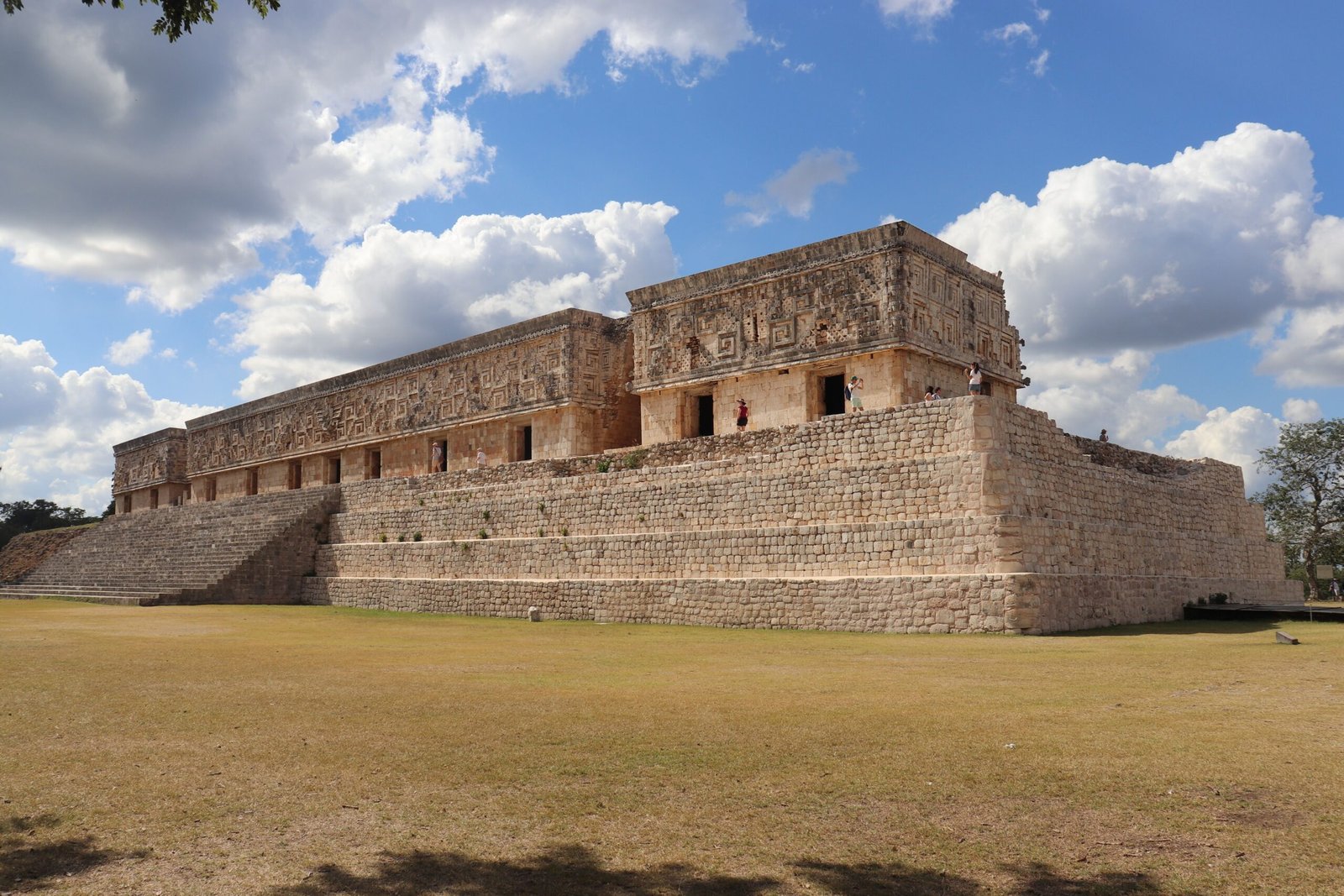
A useful historical sequence
The Maya were earlier—and their histories overlap
Before the Common Era
Early Maya centers
Maya communities developed into substantial centers long before the Aztec Empire. Archaeologists divide this long history into periods; it was never one unchanging civilization with one ruler.
About 250–900 CE
The Classic Maya period
Cities such as Tikal, Calakmul, Palenque and Copán supported royal courts and major artistic traditions. These places were related through trade, rivalry and shifting political ties.
15th–16th centuries
The Aztec Empire
The Triple Alliance became a major imperial power while Maya societies continued elsewhere. The Spanish conquest therefore encountered multiple contemporary peoples, not a single successor civilization.
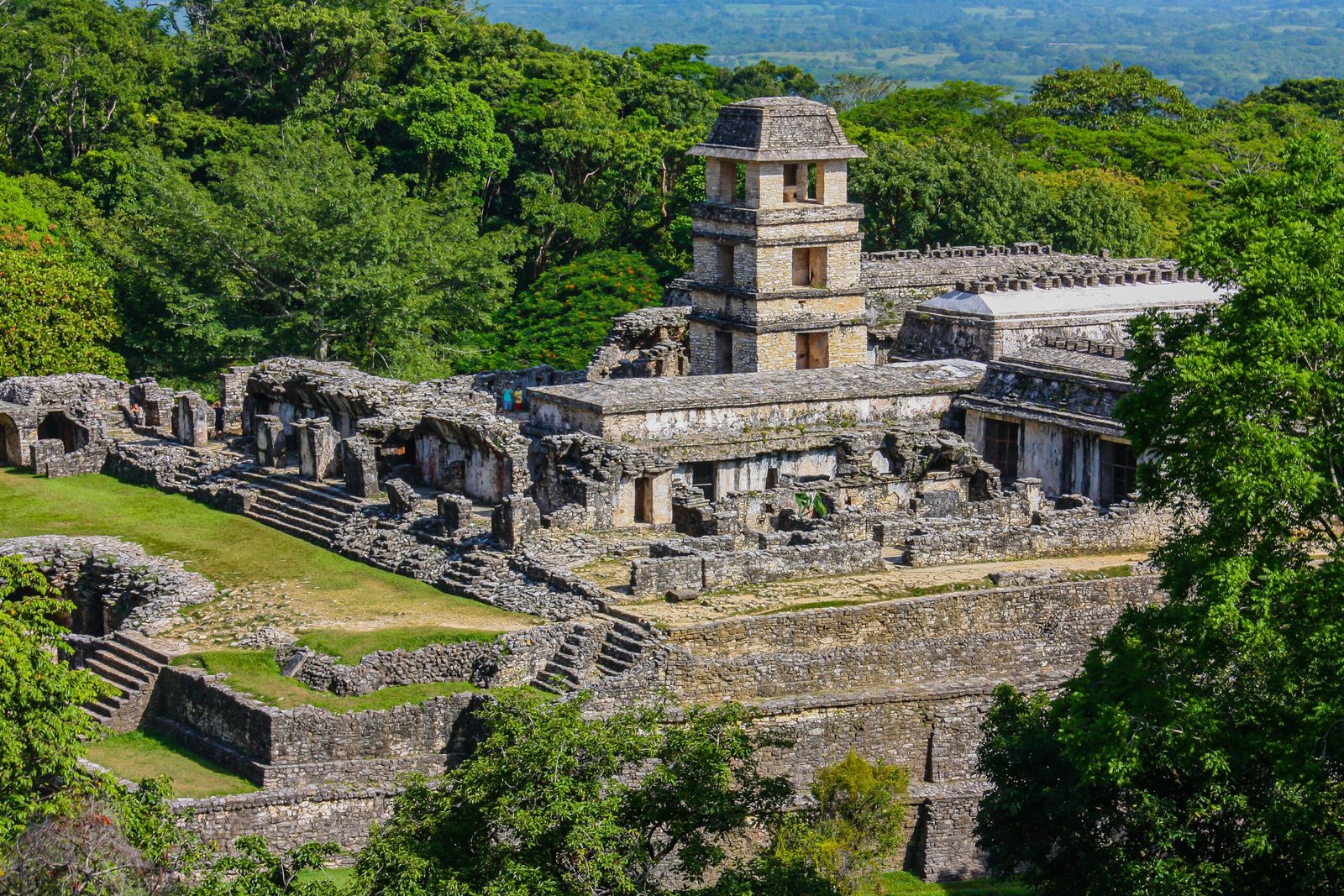
Source: The Met: Maya Area, 1000 B.C.–1 A.D..
A city’s decline is not a people’s disappearance
Changes at many Classic Maya cities were profound, but other centers flourished afterward. Chichén Itzá and later Mayapán belong to this longer history. Describing all Maya peoples as a “lost civilization” erases both the later historical record and living communities.
Source: The Met: Maya Area, 1400–1600 A.D..
How the civilizations differed
Five differences that matter beyond the dates
1. Kingdoms and imperial tribute
Maya history includes many competing kingdoms rather than one enduring empire ruling the entire Maya area. The Aztec imperial system drew resources from conquered communities through tribute. Local rulers could remain in place while meeting imperial obligations; control did not require every town to be administered identically.
Source: The Met: Mexico, 1400–1600 A.D..
2. Different languages and records
Mayan languages form a family, not one uniform language spoken unchanged across the region. Maya scribes combined word signs and syllabic signs to record names, events and religious material. Mexica records used their own pictorial and glyphic conventions; dismissing them as having “no writing” is misleading.
3. Shared calendar ideas, distinct traditions
Mesoamerican societies used interlocking ritual and solar cycles. In Maya terminology, the Tzolk’in has 260 days and the Haab has 365; their combination produces a Calendar Round. These should not be confused with the Maya Long Count, another way of recording time.
Source: Smithsonian: The Calendar System.
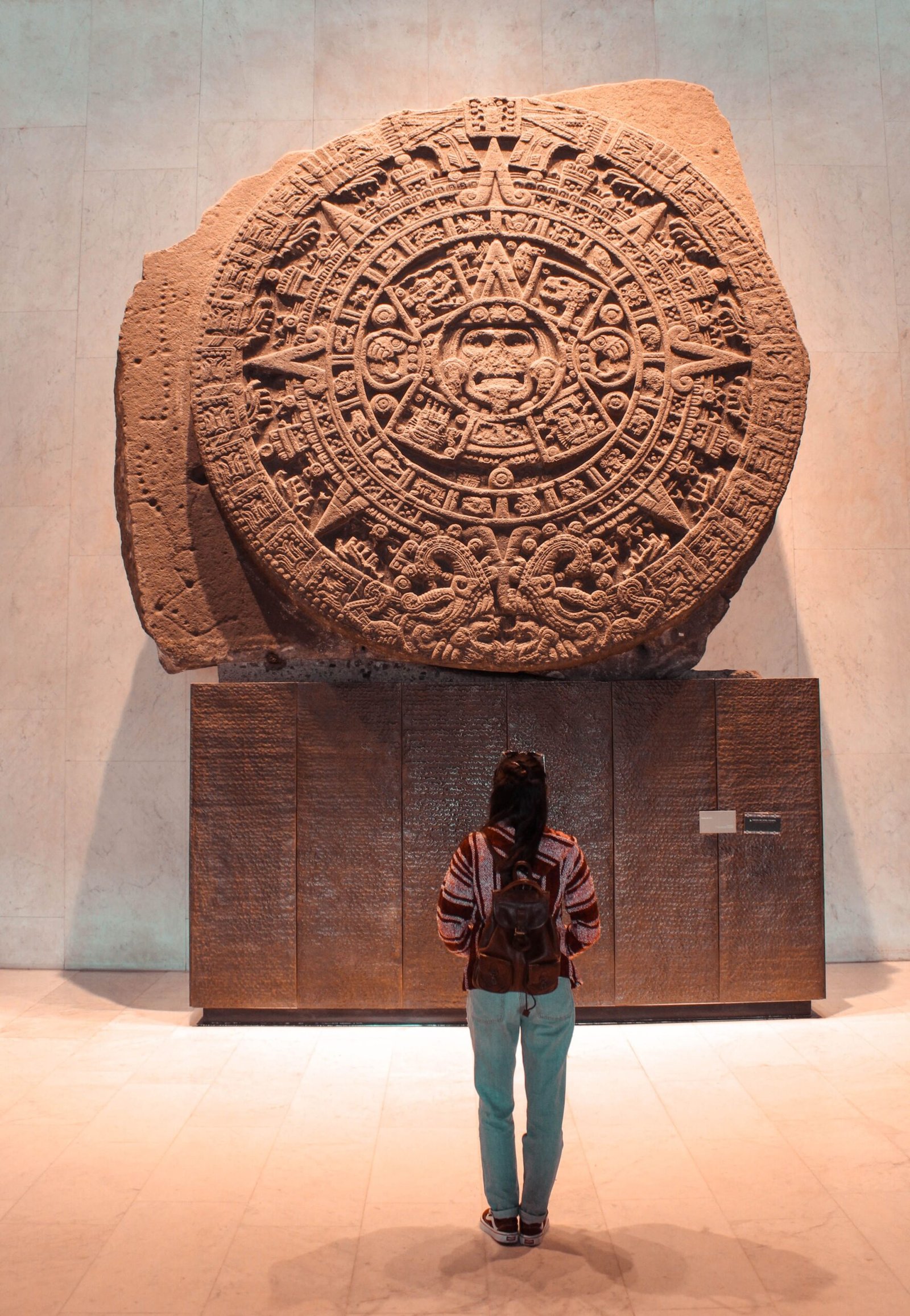
4. Related themes, different religious worlds
Agriculture, rain, rulership and sacred landscapes mattered across Mesoamerica. That shared setting does not mean the Maya and Mexica worshipped an identical set of gods. Names, stories, local cults and artistic forms need to be understood in their own contexts.
Our guide to Maya gods explores one side of that larger picture.
5. Warfare was part of both histories
Maya inscriptions and art record conflict, captives and dynastic competition. Aztec expansion also involved military power and tribute. Calling one civilization peaceful and the other warlike oversimplifies both, and ritual violence should not be treated as their only cultural achievement.
For equipment and military context, continue to Aztec weapons.
Look closely at the art
Compare objects from a specific place and date. A Maya royal portrait and a Mexica deity sculpture were created for different purposes; neither stands for everything produced by its civilization. Material, scale, patronage and archaeological context all help explain what you are seeing.
Source: The Met: Aztec Stone Sculpture.
Put the history on your itinerary
Which sites belong to which civilization?
| Site | Cultural context | How to use it in your trip |
|---|---|---|
| Chichén Itzá | Maya city with a complex history and wider Mesoamerican connections | Compare it with other Maya ruins in Mexico instead of treating one city as representative of all periods. |
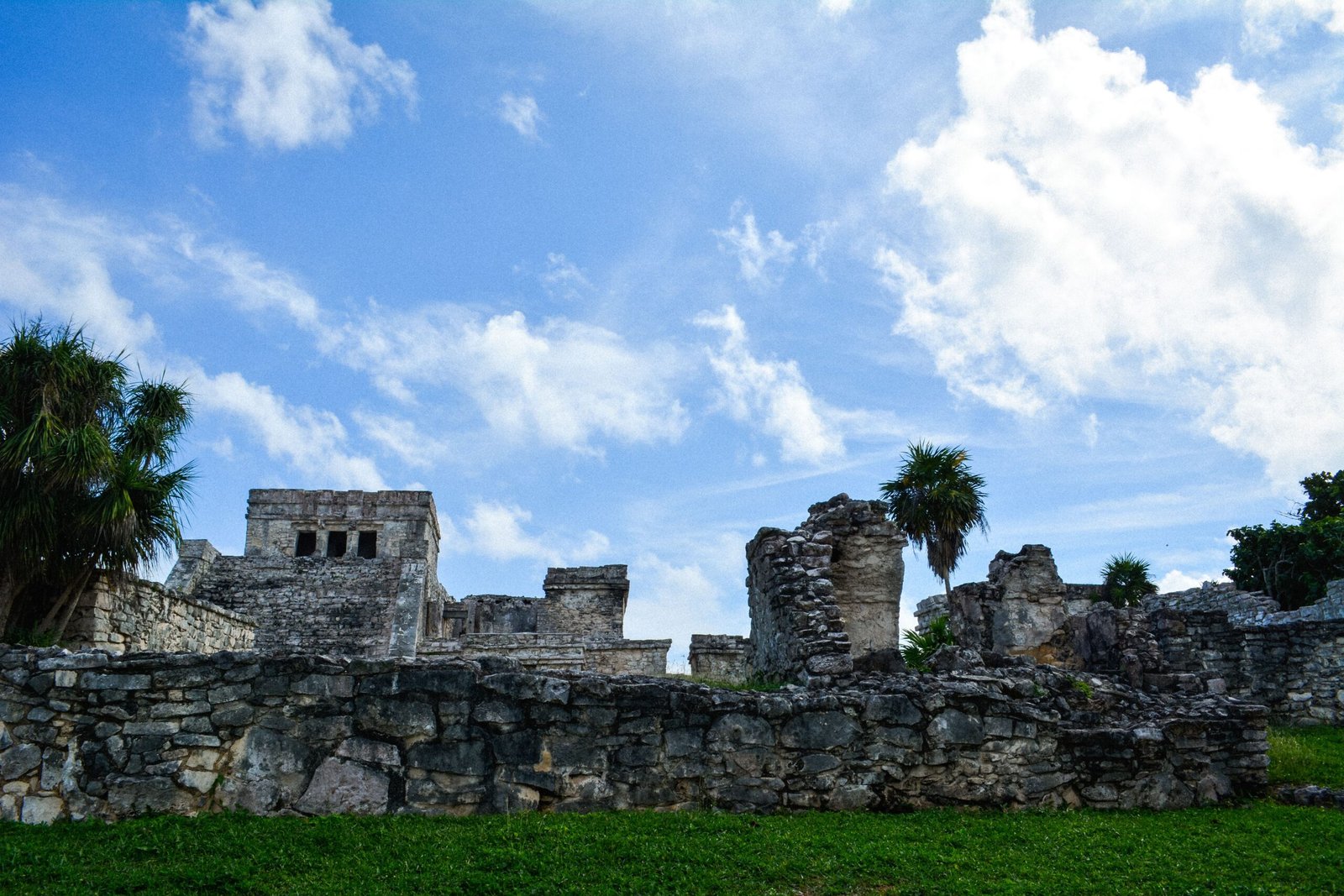
| Tulum | A Maya coastal city associated especially with the Postclassic period | Combine historical context with other things to do in Tulum. |
| Templo Mayor | The central temple complex of Mexica Tenochtitlan | Use Mexico City landmarks to connect the ruins with nearby sights. |
| Teotihuacan | An earlier central Mexican city that influenced other societies | Read the Teotihuacan visitor guide before planning the separate excursion. |
| Monte Albán | Primarily associated with Zapotec civilization; not a Maya or Aztec city | Connect it with your Oaxaca itinerary. |
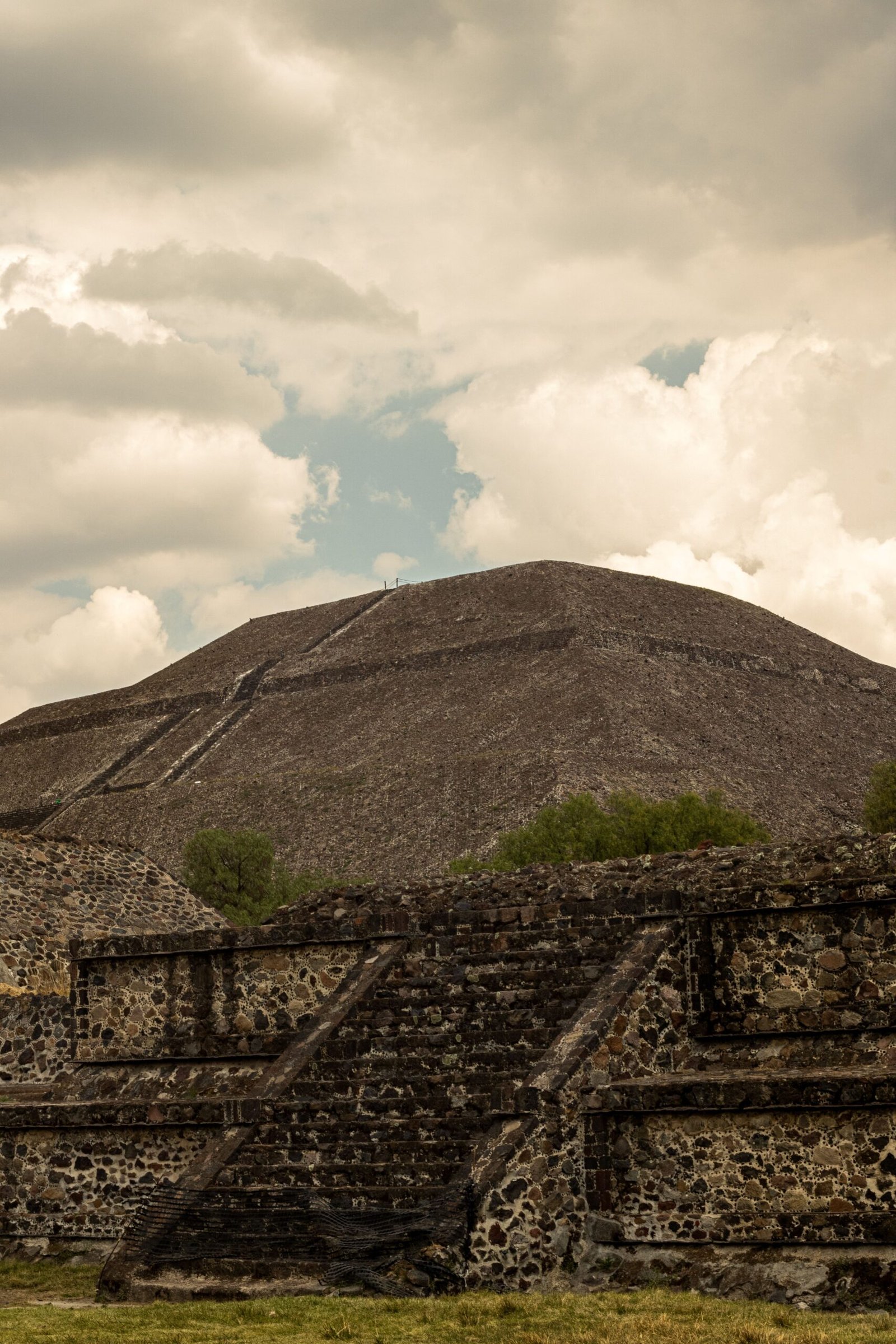
Why Teotihuacan is the most common mix-up
Teotihuacan’s major monuments and urban power belong to centuries before the rise of the Aztec Empire. Later people knew and revered the site, but that does not make them its original builders. It also interacted with Maya cities, which is different from saying it was itself a Maya capital.
Source: The Met: Teotihuacan.
For more central Mexican archaeological context, explore Aztec temples in Mexico. A building’s location in modern Mexico is not enough to identify its original cultural affiliation.
From comparison to experience
Choose a history-focused trip that fits your base
Based in Mexico City
Start with the remains of Tenochtitlan and museum context. Treat Teotihuacan as a separate day with a different historical focus.
Plan where to stay in Mexico City →Based in Cancún or Tulum
Learn the period and local history of each Maya site you visit. Do not assume all ruins were occupied at the same time or served the same role.
Plan your Cancún activities →Based in Mérida
Combine archaeological visits with time in the living region. Modern Maya life is part of the context, not merely an appendix to ancient history.
Explore Mérida day trips →A few useful answers