Mexican States: Guide To The 31 States Of Mexico
Are you planning a trip to Mexico or simply want to learn more about the wonderful states it has to offer? We’ve got you covered! Mexico, known for its colorful culture, rich history, and magnificent scenery, is a treasure mine of diversity just waiting to be explored.
While many people are familiar with major places such as Cancun and Mexico City, the true heart of Mexico rests in its states, each of which offers its combination of culture, cuisine, and natural beauty. This article is a voyage across Mexican states, which exhibit the country’s diverse splendor.
Things you'll find in this article
- 31 Mexico States
- History of Mexico
- 1. Aguascalientes
- 2. Baja California
- 3. Baja California Sur
- 4. Campeche
- 5. Chiapas
- 6. Chihuahua
- 7. Coahuila de Zaragoza
- 9. Durango
- 10. Guanajuato
- 11. Guerrero
- 12. Hidalgo
- 13. Jalisco
- 14. Mexico
- 15. Michoacan de Ocampo
- 16. Morelos
- 17. Nayarit
- 18. Nuevo Leon
- 19. Oaxaca
- 20. Puebla
- 21. Queretaro
- 22. Quintana Roo
- 23. San Luis Potosi
- 24. Sinaloa
- 25. Sonora
- 26. Tabasco
- 27. Tamaulipas
- 28. Tlaxcala
- 29. Veracruz de Ignacio de la Llave
- 30. Yucatan
- 31. Zacatecas
- What is the Largest City in Mexico?
- The Best Time to Visit Mexico and Other Attractions
- Practical Tips Before Travel to Mexico
- Conclusion
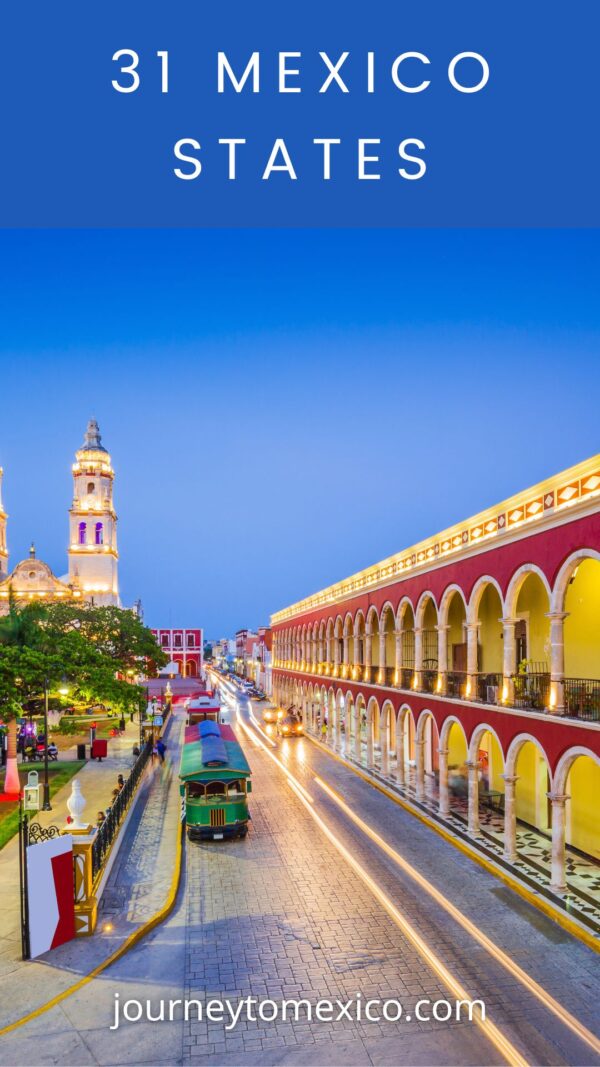
31 Mexico States
Related Read:
- Mexico Tourist Visa For Filipinos Guide
- 13 Surprising Facts About Mexico
- Digital Nomads Destinations In Mexico
History of Mexico
Mexico is a country with 31 states and one federal district that is rich in history, customs, and culture. It is the third biggest country in Latin America and possesses one of the greatest populations, with over 100 million people, making it the home of the most Spanish speakers in the world.
Regardless of the political and social changes that have happened throughout the ages, evidence of earlier cultures and events may be found all around Mexico.
Many rural parts of Mexico continue to be inhabited by indigenous people who live lives that are quite reminiscent of their predecessors. Furthermore, several pre-Columbian monuments, such as the ancient city of Teotihuacan as well as the Mayan pyramids, may still be seen across Mexico.
Mexico’s population has grown significantly since World War II, yet the allocation of wealth remains unequal. The impoverished are frequently unable to better their socioeconomic condition due to little legislative help.
1. Aguascalientes
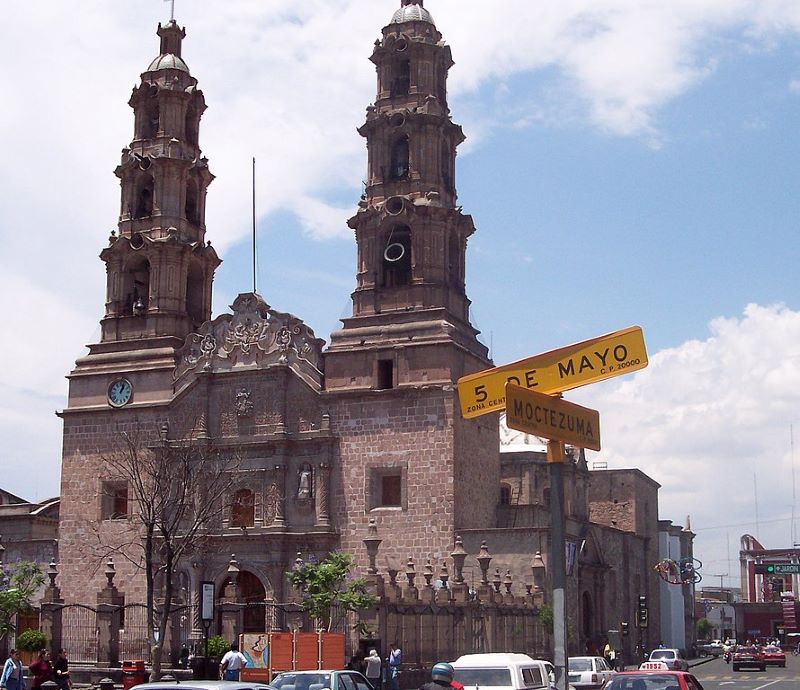
Capital: Aguascalientes
Population: 1,161,000
Aguascalientes, one of Mexico’s smallest states, is also recognized as a production hub for its dining wines, aguardiente, and various fruit liquors, and is named for the abundant hot springs in the area.
Aguascalientes is recognized as a haven and an economic powerhouse, with a thriving automobile sector and a convenient location between many of Mexico’s major cities.
Aguascalientes is home to the Cerro del Muerto, a hill that is said to resemble a human being lying down. Aguascalientes is known as “the land of the good people” because its residents are so kind.
Language Used:
- Spanish
- Nahuatl
- Mazahua
- Totonaco
Points of Interest in Aguascalientes:
- Plaza de Toros
- Vallodolid’s Bath
- Puertecito de la Virgen
- Ciénega Grande
- Catedral de Aguascalientes
2. Baja California

Capital: Mexicali
Population: 1,820,000
Because of its diverse ecosystems and scenery, Baja California is a fascinating location to explore. The contrast between the turquoise ocean along the red rocky desert filled with green cacti wins many hearts and makes it a photographer’s and nature lover’s paradise.
Baja California makes up the western peninsula’s northernmost state. It is far more populous than its southern neighbor. The northern area is fairly near San Diego, California, yet living in Mexico is significantly cheaper than living across the border.
Language Used:
- Spanish
- Mixteco
- Zapoteco
- Nahuatl
Points of Interest in Baja California:
- Valle De Guadalupe
- Ojo de Liebre Lagoon
- Balandra Beach
- Los Barriles
- Cabo Pulmo Marine National Park
3. Baja California Sur

Capital: La Paz
Population: 447, 000
Tourism, agriculture, as well as salt mining contribute the most to the state’s economy. Sea salt is mined and marketed as table salt or as a preservative.
Garbanzo beans and green chilies are among the major crops. Ranchers grow animals such as cattle and chickens. The wide coastline of the state assures abundant harvests of seafood such as shrimp, tuna, and clams.
Baja California Sur features the longest coastline of any Mexican state, stretching over 2,000 kilometers and flanked by two seas. It has the most islands of any state. Though the majority of the islands are in the Gulf of California, Margarita Island is on the Pacific side.
Language Used:
- Spanish
- Nahuatl
- Mixteco
- Zapoteco
Points of Interest in Baja California Sur:
- Jesuit Missions Museum in Loreto
- Kayaking in the Baja of Mexico
- Marina Del Rey
- The Arch
- Chileno Beach
4. Campeche

Capital: San Francisco de Campeche
Population: 928,363
Campeche, today one of the least populated states in Mexico, was once home to a rich Mayan civilization.
Campeche is also home to Mexico’s oldest carnival. The state’s second-largest city, Ciudad del Carmen, draws a significant percentage of its annual earnings from tourism connected with its modern coastline and quiet beaches.
Many tourists are attracted to the spectacular ancient sites strewn around the state, as well as the picturesque historical heart of the capital city. Museums, handicraft stores, nightclubs, and restaurants provide a variety of sightseeing options both during the day and at night.
Campeche remains one of Mexico’s best-kept secrets, with its small alleys and pastel buildings that stand in stark contrast to the sophisticated tourist attractions of Cancun and Cabo San Lucas.
Language Used:
- Spanish
- Maya
- Ch’ol
Points of Interest in Campeche:
- Campeche Archaeological Museum
- Malecon de Campeche
- Xmuch-Haltún Botanical Garden
- Playa Bonita
- Parque de Moch CouohRELATED READ: Best Things To Do In Campeche City, Mexico
5. Chiapas

Capital: Tuxtla Gutierrez
Population: 5,548,363
Chiapas is home to some of the region’s most stunning Mayan ruins. Chiapas is second among Mexican states in cacao production, which is used to manufacture chocolate, and accounts for 60% of Mexico’s total coffee output.
The Zapatistas keep going with advocates for governmental autonomy and social and political transformation in their communities. Despite this action, Chiapas’ populace remains one of Mexico’s most disenfranchised.
Chiapas’ main sectors include crude oil production, industry, agriculture, especially coffee export.
With roughly 960,000 native language speakers above the age of five, the state boasts one of the biggest and most diversified indigenous communities in Mexico, accounting for one-quarter of the state’s population.
Language Used:
- Spanish
- Tseltal
- Tsotsil
- Ch’ol
- Tojolabal
Points of Interest in Chiapas:
- Zona Arqueológica Palenque
- Agua Azul Waterfalls
- Archaeological Site of Yaxchilán
- Parque Nacional Lagunas de Montebello
- Catedral de San Cristóbal de las CasasRELATED READ: Best Things To Do In Chiapas, Mexico
6. Chihuahua

Capital: Chihuahua
Population: 3,900,000
Chihuahua is a Mexican state located in northern Mexico. It is well-known for its vast deserts, snow-capped mountains, and ravines covered in alpine forests, making it ideal for ecotourism. It also features mining towns as well as colonial cities that were significant in the country’s history.
Despite its name, Chihuahua contains more woodland regions as well as mountain and river valley landscapes. As a result, it is one of Mexico’s most geographically diversified states.
Language Used:
- Spanish
- Tarahumara
- Tepehuano del norte
- Mixteco
Points of Interest in Chihuahua:
- Centro Cultural Universitario Quinta Gameros
- Metropolitan Cathedral of Chihuahua
- Bodegas Pinesque
- Museo Semilla
- Aventura ParkRELATED READ: Best Things To Do In Chihuahua, Mexico
7. Coahuila de Zaragoza

Capital: Saltillo
Population: 2,950,000
Coahuila, a significant steel producer in Mexico, crosses the Sierra Madre Oriental Mountains. The majority of Coahuilans reside in the cool, damp eastern highlands because the western section of the state is primarily desert.
Parras de la Fuente is a renowned tourist destination due to the region’s wine production. The traditional Tex-Mex appetizer of tortilla chips, as well as melted cheese, has grown into a Tex-Mex cuisine staple.
The municipality holds an annual nacho tournament throughout the second week of October in celebration of this delightful innovation.
Language Used:
- Spanish
- Nahuatl
- Tsotsil
- Totonaco
Points of Interest in Coahuila de Zaragoza:
- Bosque Venustiano Carranza
- Museo del Desierto
- Cable Car Tower of Christ Noas
- Centro Cultural Arocena Laguna Ac
- Laguna Regional Museum
Related Read:
Capital: Colima
Population: 700,000
In 1857, Colima became a Mexican state. Less than 10 years later, President Benito of Mexico, refusing to acknowledge French authority, relocated the seat of government to Colima along with additional sites until the French were removed from power and the capital was restored to Mexico City.
The state stands first in lemon oil manufacturing and second in iron production, and this undergoes processing at Cardenas. Beverages, metal items, food preservatives, and even wooden furniture are also produced in the region.
The state’s vast Pacific coastline provides a year-round source of fresh marine delicacies used in local cuisine. Ceviche in Colima is cooked with minced fish, tomatoes, chiles, and grated carrots.
Language Used:
- Spanish
- Nahuatl
- Mixteco
- Tarasco
Points of Interest in Colima:
- Parque La Piedra Lisa
- Jardín Libertad
- Volcan de Colima
- Museo Regional de Historia de Colima
- Playa la Llorona
9. Durango

Capital: Victoria de Durango
Population: 1,800,000
Durango City along with La Laguna are the two most important locations for the state’s economic prosperity.
Clothing, wood goods, food processing, and electronics are the state’s primary industries. Furthermore, mining, notably of silver and gold, remains a significant source of revenue.
Because of the inherent magnetic fields that prevent radio signals from flowing through, the border spanning Durango, Chihuahua, as well as Coahuila is referred to as Zona del Silencio.
The state, which includes vast evergreen forests and a major chunk of the Chihuahuan Desert, is the nation’s third-largest silver producer.
Language Used:
- Spanish
- Tepehuano del Sur
- Huichol
- Nahuatl
Points of Interest in Durango:
- Catedral Basílica Menor de la Inmaculada Concepcion
- Bebeleche, Museo Interactivo de Durango
- Museo Tunel de Mineria en Durango
- Hacienda de La Ferrería
- Parque Natural Mexiquillo DurangoRELATED READ: Best Things To Do In Durango, Mexico
10. Guanajuato

Capital: Guanajuato
Population: 5,500,000
Guanajuato is home to several notable festivals and events, including local religious along historical fiestas that honor popular traditions and rituals.
Thousands of visitors from all over Mexico attend the San Miguel de Allende Chamber Music, alongside the Leon State Fair.
The state additionally tops the nation when it comes to manufacturing shoes and a variety of agricultural goods. Motor cars and auto components, chemicals, and electric machinery are among the state’s exports.
Language Used:
- Spanish
- Nahuatl
- Chichimeco Jonaz
- Otomi
Points of Interest in Guanajuato:
- Museum of the Mummies of Guanajuato
- Teatro Juarez
- Shrine of Christ the King
- Union Garden
- Triumphal Arch of the Causeway of the HeroesRELATED READ: Best Things To Do In Guanajuato, Mexico
11. Guerrero

Capital: Chilpancingo de los Bravo
Population: 3,400,000
Guerrero is well-known among ocean-loving visitors and sport fishermen. Agriculture and livestock rearing are the key economic drivers of the state’s Central Valley area.
Beans, rice, sesame, melon, lemon, and coconuts are the principal agricultural products in the area. Furthermore, Guerrero generates more than 3% of Mexico’s beef consumption.
Acapulco and Ixtapa are prominent beach towns, while Taxco is an ancient colonial silver mining town famed for its silverwork and handcrafted goods.
Cuauhtemoc, the final Aztec ruler, is entombed in Guerrero’s Santa Maria de la Asuncion Church. Every year on the anniversary of his death, the town hosts a celebration that includes traditional dance and costumes.
Language Used:
- Spanish
- Nahuatl
- Mixteco
- Tlapaneco
Points of Interest in Guerrero:
- La Quebrada
- Santa Prisca de Taxco
- Isla de La Roqueta
- Parque Nacional Grutas de Cacahuamilpa
- Bahia de Zihuatanejo
12. Hidalgo

Capital: Pachuca
Population: 2,800,000
The state, named for revolutionary hero Miguel Hidalgo, is strongly independent: the Mexican Revolution continued the longest in this state of any other.
Hidalgo’s economy is now fueled by vast silver, gold, and mineral reserves. La Huasteca, a rich lowland region in the state’s north, produces some of Hidalgo’s main crops.
Auto components, metallurgy, and oil production generate additional revenue, and the state is quickly becoming one of Mexico’s leaders in the building of subway and railroad trains, heavy machinery, autos, and trucks.
Language Used:
- Spanish
- Nahuatl
- Otomi
- Tepehua
Points of Interest in Hidalgo:
- Grutas Tolantongo
- Zona Arqueologica de Tula
- Estadio Hidalgo
- Monumental Clock
- Basaltic Prisms of Santa María Regla
13. Jalisco

Capital: Guadalajara
Population: 7,400,000
Jalisco is a Mexican state in the country’s central-western section, near the Pacific Ocean. It is one of Mexico’s most important economic and cultural hubs, causing the state’s slogan to be translated as “Jalisco is Mexico.”
It has expanded to include numerous smaller municipalities, especially Tlaquepaque, Zapopan, and the historic towns of Tonala and El Salto. Guadalajara is the location of some of the best colleges in Mexico.
Puerto Vallarta, a renowned tourist destination, has a unique blend of highland rainforests and stunning white beaches.
Language Used:
- Spanish
- Huichol
- Nahuatl
- Tsotsil
Points of Interest in Hidalgo:
- Guadalajara Cathedral
- Hospicio Cabañas
- Teatro Degollado
- Plaza de la Liberacion
- Puerto Vallarta Malecon
14. Mexico

Capital: Toluca de Lerdo
Population: 16,200,000
The state of Mexico, not the country of Mexico, is notable as the first territory to allow admission to the country we know today. It boasts the most people and the largest population density in the country, as well as the most industrialized economy.
Visitors rush to Mexico to see two ancient Aztec ruins, the Pyramids of the Sun and Moon, as well as the state’s famed twin volcanoes.
Mexicans are inhabitants of the state, whereas Mexicans are residents of the country. Mexicans are Mexicans, but not all Mexicans are Mexicans.
Language Used:
- Spanish
- Mazuhua
- Otomi
- Nahuatl
Points of Interest in Hidalgo:
- Cosmovitral
- Pyramid of the Sun
- Museo Nacional del Virreinato
- Museo Soumaya
- La Marquesa
15. Michoacan de Ocampo

Capital: Morelia
Population: 4,500,000
Every winter, Michoacan is home to thousands of monarch butterflies from North America. Residents and visitors alike enjoy Michoacán’s colorful Day of the Dead celebrations as well as excursions to the Paricutin volcano, which erupted in 1943.
Michoacán, Mexico’s major avocado supplier, comes in third in chickpea and lemon output, while fourth in sesame along with sorghum crops. Sugarcane, wheat, and fruits are other essential mainstays.
La Tzaráracua waterfall, located in Uruapan, one of Mexico’s oldest cities, is one of the most picturesque in the state. The waterfall is generated by the Cupatitzio River, meaning “the river that sings” in the indigenous Purepecha language.
Language Used:
- Spanish
- Tarasco
- Nahuatl
- Mixteco
Points of Interest in Hidalgo:
- Lago de Camecuaro National Park
- Diocesan Sanctuary of Our Lady of Guadalupe
- Uruapan National Park
- Monarch Butterfly Sanctuary Sierra Chincua
- Museo de la Mina las Dos Estrellas
16. Morelos

Capital: Cuernavaca
Population: 1,800,000
Morelos, famous for being the hometown of revolutionary hero Emiliano Zapata, has long been inhabited by Nahua Indians, who continue to participate in subsistence farming across the state.
Morelos is now a highly inhabited and urbanized state, with one-fifth of its inhabitants concentrated in the capital city.
Transportation within the state is facilitated by an extensive network of trains and highways, and an express highway links Cuernavaca to Mexico City in the north along with the port of Acapulco in the south.
The mineral hot springs of Agua Hedionda are located near Cuautla, Morelos. Two enormous pools are fed by the rushing sulfur springs, which keep a temperature of 27 degrees Celsius. There are also other smaller private pools and sports facilities.
Language Used:
- Spanish
- Nahuatl
- Mixteco
- Tlapaneco
Points of Interest in Hidalgo:
- Archaeological Zone Tepozteco
- Jardines de Mexico
- Catedral de Cuernavaca
- Museo Regional de los Pueblos de Morelos
- Centro Cultural Teopanzolco
17. Nayarit

Capital: Tepic
Population: 1,100,000
Nayarit is a state in central-western Mexico with a population of only 1.1 million inhabitants. Agriculture and fishing are key aspects of its economy, but the San Blas area’s comparatively high-quality beaches have helped it build a tourist sector.
Farmers in Nayarit take advantage of the state’s setting in a fertile valley, and the state is an attractive vacation spot with 181 miles of coastline. Tourism along with other service businesses provides around 24% of the state’s GDP.
Agriculture also contributes to the economic benefits, with sugarcane, and tropical fruits among the most important crops.
Nayarit features a unique mix of tropical and temperate environments. There are over 300 orchid species there. Crocodiles and 400 bird species are among the notable biodiversity.
Language Used:
- Spanish
- Cora
- Huichol
- Tepehuano del Sur
Points of Interest in Hidalgo:
- El Cora Crocodile Sanctuary
- Sayulita Beach
- Parque La Loma
- Catedral de Tepic
- Cocodrilario Kiekari
18. Nuevo Leon

Capital: Monterrey
Population: 4,700,000
Nuevo Leon, located on the international border separating Mexico and the United States, is recognized for its adventure sports such as rock climbing and rappelling, although the majority of the state’s revenue is generated by ironwork and smelting factories.
The state is Mexico’s third most developed, and the majority of citizens enjoy a high quality of living. San Pedro Garza Garcia, one of its municipalities, has Mexico’s second-highest per capita income.
The Potrero Chico Canyon in Hidalgo is regarded as one of the top ten sites in the world to learn to rock climb. The difficulty level ranges from high overhanging walls to simple slabs.
Language Used:
- Spanish
- Nahuatl
- Huasteco
- Zapoteco
Points of Interest in Hidalgo:
- Fundidora Park
- Mexican History Museum
- Paseo Santa Lucía
- Grutas de García
- Parque Ecologico La Huasteca
19. Oaxaca

Capital: Oaxaca de Juarez
Population: 3,900,000
Because of its kilometers of sandy beaches and rich ancient sites, Oaxaca has become a popular tourist destination. While Oaxaca officially includes 16 indigenous tribes, each group has hundreds of subgroups, each with its own language and social traditions.
Oaxaca, like the neighboring states of Guerrero and Chiapas, has a strikingly wide collection of indigenous cultures with centuries-old origins.
Mezcal, an alcoholic beverage comparable to tequila but distilled from cactus species other than the blue agave used for tequila, is one of Oaxaca’s most well-known products.
Language Used:
- Spanish
- Zapoteco
- Mixteco
- Mazateco
Points of Interest in Hidalgo:
- Templo de Santo Domingo de Guzman
- Mercado 20 de Noviembre
- Jardín Etnobotanico de Oaxaca
- Basílica de Nuestra Señora de la Soledad
- Museo De La Filatelia MUFIRELATED READ: Oaxaca safe? What You Need To Know (2023)
20. Puebla

Capital: Puebla de Zaragoza
Population: 5,800,000
Mole Poblano, a typical Mexican cuisine, originated in Puebla. Puebla’s primary industrial businesses are now the automobile and textile industries. Manufacturing accounts for around 24 percent of the total GDP.
Many of Puebla’s rich traditions encompass cuisine and art. Mole poblano, a spicy sauce, originated in the 17th century and is still popular today.
Puebla is particularly widely renowned for its Talavera ceramics, which are made following the same techniques that the Spaniards brought in the 16th century.
Due to the numerous decorated street lamps created by the French, Puebla is frequently referred to as the City of Street Lights. The city’s beautiful wrought iron balconies and exquisite crystal chandeliers decorating old buildings also reflect the French past.
Language Used:
- Spanish
- Nahuatl
- Totonaco
- Mazateco
Points of Interest in Hidalgo:
- Museo Amparo
- Capilla del Rosario, Templo de Santo Domingo
- Museo Internacional del Barroco
- Alley of the frogs
- Acuario Michin Puebla
21. Queretaro

Capital: Santiago de Queretaro
Population: 1,900,000
Mexicans declared their independence for the first time at Queretaro, one of Mexico’s smallest states. Today, the largest cities of Queretaro are residents of industrial complexes that manufacture metal items, equipment, chemicals, and processed foods.
The majority of the state’s manufacturing enterprises are concentrated in or around the city of Querétaro. Among the most well-known food processing corporations with operations in the state are Carnation and Purina, while various textile mills produce apparel made of cotton, wool, and henequen.
Every April, thousands of spectators and contestants gather in San Joaquin for one of the country’s most prominent Huapango competitions. Huapango is a prominent musical style that originated in Huasteca, a region in northeast Mexico.
Language Used:
- Spanish
- Otomi
- Nahuatl
- Triqui
Points of Interest in Hidalgo:
- Acueducto de Queretaro
- Templo de Santa Rosa de Viterbo
- Centro Historico
- Zenea Garden
- Museo Casa de la ZacatecanaRELATED READ: Best Things To Do In Querétaro, Mexico
22. Quintana Roo

Capital: Chetumal
Population: 1,400,000
Quintana Roo, Mexico’s youngest state, remained sparsely inhabited until the late twentieth century when it sprang onto the scene as one of the country’s top tourist destinations. It is home to Mayan ruins as well as vacation destinations including Cancun, Cozumel, and Playa del Carmen.
Every year, guests from all around the world attend annual events. The Carnaval takes place each spring during the week preceding Ash Wednesday and features parties, parades, and dancing.
In May, a jazz festival offers free concerts including world-renowned artists such as Wynton Marsalis. The World Cup Triathlon takes place in November, and it features elite athletes competing in a demanding competition of swimming, cycling, and running.
Language Used:
- Spanish
- Maya
- Tseltal
- Ch’ol
Points of Interest in Hidalgo:
- Two Eyes Cenote
- Playa Norte- Isla Mujeres
- La Isla Paradise Experience
- Playa Akumal
- Xplor
23. San Luis Potosi

Capital: San Luis Potosi
Population: 2,600,000
The Mexican national song was written at San Luis Potosi, which boasts some of the finest silver mines in Mexico.
The Huastecs, referred to as the Teenek, are the major indigenous group in San Luis Potosi today. The majority of this population resides in the Pánuco River basin, which encompasses 4,000 square miles and is divided into 18 municipalities.
In the village of Xilitla, there is a bizarre castle erected in the middle of the forest. Edward James, an Irish-American businessman and railroad owner, erected the castle in 1950 and lived among the locals for more than a decade, teaching alternative medicine.
Language Used:
- Spanish
- Nahuatl
- Huasteco
- Pame
Points of Interest in Hidalgo:
- Catedral Metropolitana de San Luis Potosí
- Tangamanga Park I
- Plaza de Aranzazu
- Museo Nacional de la Mascara
- Train museum
24. Sinaloa

Capital: Culiacan
Population: 2,800,000
Sinaloa is Mexico’s only state where the ancient ball game known as ulama continues to be played. Sinaloa, known as the “Breadbasket of Mexico,” devotes more than three-quarters of its area to agriculture.
It is the greatest producer of rice and vegetables in the country, as well as the second largest producer of wheat and beans. Additional money is generated through fishing and cattle, as well as Mazatlán’s canning factory, which is the largest in Latin America.
Culiacán holds an agricultural expo named Expo Agro Sinaloa each January. This top agricultural trade fair is Mexico’s largest of its type, allowing exhibitors to showcase their products, machinery, tools, as well as technology.
Language Used:
- Spanish
- Nahuatl
- Mayo
- Zapoteco
Points of Interest in Hidalgo:
- Parque Natural Faro Mazatlan
- Catedral Basílica de la Inmaculada Concepcion
- Angela Peralta Theater
- Malecon de Mazatlan
- Golden Zone
25. Sonora

Capital: Hermosillo
Population: 2,700,000
Sonora, Mexico’s second biggest state, is sparsely inhabited. The terrain is mountainous and desert, with minimal rainfall and practically year-round sunshine. Mexico produces nearly all of its copper.
Sonora has a distinct cultural mix. Ancient civilizations like the Yaquis, Mayos, and Cucapas still exist in the state. Sonora, which borders Arizona and New Mexico, is similarly impacted by American styles and clothes.
Sonora heavily promotes ecotourism and adventure tourism. Mountain biking, scuba diving, fishing, as well as camping are among the most popular activities. During the Mexican Revolution, Hermosillo, the state capital, acted as the nation’s capital for five months.
Language Used:
- Spanish
- Nahuatl
- Yucatec Maya
- Mixteco
Points of Interest in Hidalgo:
- Parque La Ruina
- Playa Bonita Beach
- Isla San Jorge
- Catedral Hermosillo
- Nacapule Canyon
26. Tabasco

Capital: Villahermosa
Population: 2,300,000
This low, flat state retains a sizable indigenous population that largely lives in rural regions. Contrary to common opinion, Tabasco was not called after the fiery peppers of the same name, even though the state is a large producer of cocoa, coconuts, sugarcane, and tropical fruits.
Villahermosa is the state’s business and manufacturing hub. Food processing businesses and manufacturers of wood goods, soap, and clothes may be found throughout the city.
Due to the region’s considerable Cuban influence, the spoken language of Tabasco, contrasting the rest of Mexico, tunes much like Caribbean Spanish.
Language Used:
- Spanish
- Ch’ol
- Tseltal
- Tsotsil
Points of Interest in Hidalgo:
- Parque Museo La Venta
- Hacienda Jesus Maria
- Lord of Tabasco Cathedral
- Regional Museum of Anthropology
- Parque Natural Villa Luz
27. Tamaulipas

Capital: Cuidad Victoria
Population: 3,300,000
Tamaulipas is the location of Tampico, one of the country’s earliest ports, as well as several prominent theatrical companies. Agriculture and tourism are the state’s main economic activity, however manufacturing accounts for around 21% of overall output.
Tamaulipas, located in the rich lowland region known as “La Huasteca,” offers a perfect agricultural environment and is Mexico’s leading producer of sorghum.
La Picota, a popular regional dance, comprises dancers that jump, leap, and swirl in lively choreography. A clarinet and drum accompany the dance’s rhythmical gestures, which are considered to be inherited from Scottish folk dancing.
Language Used:
- Spanish
- Nahuatl
- Huasteco
- Totonaco
Points of Interest in Hidalgo:
- Altama City Center
- Parque Cultural Reynosa
- Plaza de Armas Tampico
- Parroquia De Nuestra Señora De Guadalupe
- Zoologico De Reynosa
28. Tlaxcala

Capital: Tlaxcala
Population: 1,200,000
The ancient Olmeca-Xicalanca culture previously lived in Tlaxcala, Mexico’s smallest state. Three notable bullrings may be found in Tlaxcala. The Jorge “El Ranchero” Aguilar plaza, established in the 18th century in the center of Tlaxcala City, is the most popular.
It is currently recognized for its farms and textiles. Tlaxcala has a long and varied cultural heritage. Modern enterprises are delivering new income to the region’s residents, but they are also endangering the region’s distinctive customs and traditions.
Every year, the carnival in Tlaxcala begins on the Friday before Ash Wednesday. The traditional celebration of the Quema del mal humor kicks off the festivities with a parade for a paper puppet in a coffin, symbolizing ill moods. The puppet is then burnt, accompanied by black pieces of paper representing rage and despair.
Language Used:
- Spanish
- Nahuatl
- Totonaco
- Otomi
Points of Interest in Hidalgo:
- Basilica of Our Lady of Ocotlan
- Palacio de Gobierno del Estado de Tlaxcala
- Escalinatas de los Heroes
- Cacaxtla Archaeological Site
- La Malinche National Park
29. Veracruz de Ignacio de la Llave

Capital: Xalapa
Population: 7,700,000
While seeking gold in the region, Hernan Cortes created the city of Veracruz. Today, the state is known for its magnificent beaches and Carnaval, an annual festival that includes music, dance, including spectacular parades.
Many Otomi people, who were among the region’s initial settlers, now remain in Veracruz. The Otomi are Mexico’s fifth-largest indigenous ethnic group, spread over Central Mexico from Michoacán to Veracruz.
Veracruz conducts its famed Carnaval, a Mardi Gras-style carnival, nine days before Ash Wednesday. Many consider the celebrations to be a sexual celebration, as they precede Lent, a season of spiritual fasting.
Language Used:
- Spanish
- Nahuatl
- Totonaco
- Huasteco
- Otomi
Points of Interest in Hidalgo:
- Acuario de Veracruz
- Mexico Naval Museum
- Los Portales de Veracruz
- Faro Venustiano Carranza
- San Juan de Ulua
30. Yucatan

Capital: Merida
Population: 2,000,000
The Mayans prospered and built one of their most important towns, Chichen Itza, in what is now known as Yucatan. Because it was formerly separated from the rest of Mexico, the state developed its own distinct culture. Today, service-based businesses make up around 23% of the state’s GDP.
Yucatán’s green and yellow coat of arms depicts a native Mayan deer jumping over an agave plant, an important crop in the province.
Mayan arches cover the top and bottom borders, with Spanish bell towers along the left and right. These emblems symbolize the state’s Mayan and Spanish ancestors.
Language Used:
- Spanish
- Maya
- Ch’ol
- Tseltal
Points of Interest in Hidalgo:
- Chichen Itza
- Mayan World Museum of Merida
- Catedral de Merida – San Ildefonso
- Two Eyes Cenote
- Zona Arqueologica de Ek Balam
31. Zacatecas

Capital: Zacatecas
Population: 1,500,000
The greatest and bloodiest fight of the Mexican Revolution was La Toma de Zacatecas. Zacatecas, formerly a silver mining hub, has established a reputation as an agrarian center known for its cereals and sugar cane.
The coat of arms of the state represents the entrance of the Spaniards, who created the city, surrounded by native people’s weapons. Above the figures hangs a flag with the inscription “Work conquers all.”
Even though the majority of the Zacatecas area is desert, agriculture is the primary source of revenue for the state. Farmers in Zacatecas are Mexico’s leading producers of beans and cactus leaves, as well as major guava, grape, and peach harvests.
Language Used:
- Spanish
- Huichol
- Tepehuano del Sur
- Nahuatl
Points of Interest in Hidalgo:
- Catedral Basílica de Zacatecas
- Teleferico de Zacatecas
- Museo Rafael Coronel
- Mina El Eden
- Notaria de la Parroquia de Santo Domingo
What is the Largest City in Mexico?
Mexico City, the country’s largest metropolis and the Western Hemisphere’s most populated metropolitan region is also known as the Distrito Federal, or federal district. It is the country’s economic and cultural center, as well as the location of the federal government headquarters.
Mexico City is the world’s sixth-biggest city area, with a population of more than 20 million people in its wider urban area, and the single largest Spanish-speaking city. It accounts for more than 15% of Mexico’s total GDP. This city is generally indicated on any map of Mexico’s states, however, other significant cities may not be.
Residents and visitors may enjoy exhilarating diversions at sports arenas such as Estadio Azteca along with the Autodromo Hermanos Rodriguez.
La Plaza de la Constitución, Mexico City’s main square, is also known as El Zocalo. The Catedral Metropolitana, situated north of El Zócalo, constitutes one of the world’s biggest cathedrals.
Which is the Most Populous State in Mexico?
The state of Mexico has the most people in the country. The state of Mexico has a population of 16,200,000 people, is growing rapidly, and contains approximately 14% of the national population.
In 2020, the entire population of Estado de Mexico was around 16,000,000 people, with 51.4% women and 48.6% males. The most populous municipalities in Estado of México were Ecatepec de Morelos, Nezahualcoyotl, and Toluca.
The age categories with the biggest concentrations of persons were those aged 15 to 19, 10 to 14, and 20 to 24. They made up 25.6% of the total population.
The Best Time to Visit Mexico and Other Attractions
Between December and April, when the climate is dry and the outside temps are lower, is the best time to visit Mexico. Mexico is split into seven primary climate zones, with deserts in the north/central region and tropical temps in the south.
Mexico City

From November through April, the dry season is also the best time to go to Mexico City. Mexico City is located in the heart of the nation on a high plateau. Throughout June through September, the city is at a height of 7,350 feet and has an 80% chance of rain every day.
While the winter months are milder, with average temperatures ranging from 45 to 81 degrees Fahrenheit, there is more sun and better weather for outdoor exploration between November and April.
Cancun (Quintana Roo)

Cancun is best visited between February and April, after the rainy season and before temperatures reach their height.
Between November and March, the Riviera Maya, which includes major tourist destinations such as Cancun and Playa del Carmen, is additionally a terrific place to visit.
It’s drier at this time of year, making it ideal for finding a place on the famed white-sand beaches or diving or surfing in the gorgeous mild seas.
Despite December until March being officially winter, the Riviera Maya is a tropical place with excellent weather and water temperatures of about 79°F despite the season.
It’s worth noting that this location is extremely popular with college students during their Spring Break, which runs from March to April. You may prefer to plan outside of this period for a more peaceful trip.
Yucatan

The Yucatán features a tropical climate, with temperatures seldom falling below 25°C during the day. The dry high-season seasons of December to April are the greatest time to come because of the calm sky and clear, more predictable waters, which provide for the finest snorkeling and fishing.
However, lodging costs substantially more, and travel and hotel accommodations are both more expensive.
Keep in mind that between March to early April, the Yucatan is a favorite Spring Break vacation for US college students. If you’re looking to avoid the booze-fueled partying, avoid the Riviera Maya.
Practical Tips Before Travel to Mexico
To guarantee a seamless and comfortable trip, like with any overseas vacation, it is essential to be prepared and knowledgeable. Here are some practical things to consider before embarking on your Mexican excursion to help you make the most of it.
Learn Basic Spanish
If you learn Spanish, you will be able to communicate more successfully with native Spanish speakers. Latin American countries are our most important business partners.
The ability to speak in Spanish enhances your resume tremendously. Multilingualism will make you more competitive in the workplace.
It is important to understand that Spanish spoken in Spain varies from Spanish spoken in Mexico. Their pronunciation will be the most evident difference between them. So, when studying these two, be careful not to confuse them.
Never Drink the Tap Water in Mexico
As stated by the Centers for Disease Control and Prevention, tap water in Mexico is still unsafe to drink throughout your visit, so come prepared. Local water, if not adequately filtered, can cause stomach upset and diarrhea in travelers.
Despite the fact that the water is properly clean and treated, the system that distributes it may taint the water as it travels to your tap. Filtered water is the best option.
Many visitors waste a lot of time looking for anything to drink and are sometimes overcharged by opportunistic sellers selling bottled water. Purchasing bottled water adds up rapidly, and the plastic damages the local ecology.
Pay with Pesos!
The Mexican peso is the country’s official currency. It is split into a hundred centavos. The money was based on Spain’s official currency, the ‘real,’ which was the Spanish dollar at the time. The name of the Mexican peso comes from the silver 8-real coins produced by Spain in Mexico.
A combination of pesos and US dollars is the ideal currency to carry to Mexico. Spend the funds for tours, admission fees, lodging, and transport. Everything else is in pesos. Before you go, you should be able to easily get pesos in your home country.
Mexico is a Safe Place
In recent years, Mexico has received a lot of bad publicity about safety. It’s also true that regions of the country have recently seen a rise in cartel-related violent crime.
Most hazardous areas in Mexico are unlikely to be visited. To be honest, there have lately been some high-profile safety concerns in Playa del Carmen along with Tulum criminal occurrences that have affected tourists.
On a yearly basis, millions of Americans travel to Mexico for vacation. Apart from that, the Mexican government is working hard to keep tourist areas secure and safe. All you need to do is be vigilant and avoid any questionable clues while you’re there.
Conclusion
Mexico’s varied tapestry weaves a riveting story of history, culture, and natural beauty. From the busy streets of Mexico City to the peaceful beaches of Quintana Roo, each state provides a distinct experience that contributes to the country’s vivid personality.
The voyage through Mexico’s states exemplifies the rich indigenous past, colonial legacy, and modern-day energy that characterizes this amazing country.
Each state entices us with the promise of fresh experiences and viewpoints, beckoning us to explore deeper and find more facets of Mexico’s enthralling personality.
So, whether you’re planning your first vacation to Mexico or your tenth, keep in mind that the country’s states will always have something new and fascinating to offer, beckoning you to be a part of their continuous story.


