Día de los Muertos: The Day of the Dead Festival in Mexico
Día de los Muertos, or Day of the Dead, is an important festival mostly held in Mexico on November 1 and 2. However, depending on the locality, it may also be held on 31 October or 6 November or as early as 28 October.
Day of the Dead is largely observed in Mexico, but it is also celebrated all over Latin America and by people of Mexican heritage everywhere else in the world.
The Day of the Dead is a celebration not only of death but life as well. It is celebrated with colorful calaveras (skulls) and calacas (skeletons).
Read on to find out the history of Day of the Dead and the traditions that go with it, as well as important facts about this unique festival and best places to go if you want to witness this iconic Mexican holiday.
Things you'll find in this article
- Día de los Muertos: The Day of the Dead Festival in Mexico
- Day of the Dead: History
- Day of the Dead Traditions
- 10 Facts About Day of the Dead
- 1. Day of the Dead is not the “Mexican Halloween.”
- 2. November 1 is known as “Día de los Angelitos” or Day of the Little Angels.
- 3. Day of the Dead is not a somber or spooky occasion.
- 4. Offerings that adorn the ofrendas are meant to symbolize the elements of fire, water, earth, and wind.
- 5. Pan de muerto, the traditional Mexican pastry eaten during Day of the Dead, literally means “bread of the dead.”
- 6. La Calavera Catrina is the most recognizable symbol of Día de los Muertos celebrations.
- 7. According to myth, hairless Mexican dogs guide the dead back to the underworld.
- 8. Calaveras or sugar skulls symbolize the souls during Day of the Dead.
- 9. Agua de Jamaica is a very popular drink during the Day of the Dead feast.
- 10. Other countries also celebrate Day of the Dead.
- 6 Best Places To Witness the Day of the Dead in Mexico
Día de los Muertos: The Day of the Dead Festival in Mexico

Day of the Dead: History
Día de los Muertos, which Hollywood popularized globally through movies like Disney Pixar’s Coco in 2017, the 2015 James Bond film, Spectre, and 20th Century Studios’ The Book of Life in 2014, originated in Mexico. It is a centuries-old tradition that traces its roots back to the ancient Aztecs in what is now central Mexico.
The Aztec people used skulls to honor the dead over a thousand years before Day of the Dead celebrations existed. When the Spaniards conquered the Aztec empire in 1521, the Catholic Church changed the indigenous celebrations of the dead to the All Saints Day on November 1 and All Souls Day on November 2.
The indigenous traditions honoring the dead became fused with non-official Catholic practices and concepts of an afterlife. The Day of Dead fell on November 2, while November 1 was given in honor of those who died as children or infants.
Day of the Dead Traditions
Day of the Dead is the multi-day holiday involving family and friends. They get together to pay respects to family and friends who have departed.
During this festival, people build altars in their homes with offerings to the souls of their loved ones. These offerings are called ofrendas. They also light candles in front of the photos of the departed, along with items the loved ones have left behind. Families and friends read poems and letters as well as tell jokes and anecdotes about the dead.
It is believed that the strong scent of yellow or orange cempasúchil flowers – called the Aztec marigolds – helps guide the souls home. Offerings on the ofrendas may include water, chilies, tequila, tamales, and pan de muerto which is a type of bread made especially for Day of the Dead. These offerings are lined up by the Aztec marigolds.
Mexican families clean the graves of their loved ones in preparation for the spirits to come on the night of November 2. They take food to the graves to entice the spirits and partake in a community celebration. Bands play and people dance to please the visiting souls of their beloved deceased.
During this time, market stalls sell calaveras, or decorated skulls made of sugar or chocolate. Stores and restaurants all over Mexico are adorned with sheets of tissue paper cut into delicate shapes related to the holiday, with freshly cut Aztec marigolds lining the storefronts. These strung papers are called papel picado, or pierced papers.
Day of the Dead has been part of Mexican culture for ages, but this festival has also been atrracting tourists recently. Hordes of tourists flock to town and cities all over the country to witness this colorful event.
Day of the Dead celebrations in Mexico vary by region, although some elements are the same like the ofrendas. In some states like Morelos, families open their homes to anyone interested in viewing the altar. Visitors are offered food and drink.
Mexico City features elaborate Day of the Dead parades through the city, which attracts millions of tourists.
10 Facts About Day of the Dead
1. Day of the Dead is not the “Mexican Halloween.”

Although celebrations of Day of the Dead also happen on October 31, the official date of this public holiday is November 2. It is not the Mexican Halloween, despite the dressing up and skeletons.
Day of the Dead has origins from pre-Columbian Mesoamerica rituals in southern Mexico, observed to honor the lives of departed loved ones.
2. November 1 is known as “Día de los Angelitos” or Day of the Little Angels.
Day of the Little Angels takes place on November 1. This holiday is dedicated to dead children. The graves of children are cleaned and adorned with candles, paper streamers, and flowers – especially the Aztec marigolds.
3. Day of the Dead is not a somber or spooky occasion.
It is, in fact, just the opposite. During the Day of the Dead festival, streets, homes, and public spaces in Mexican towns and cities are adorned with colorful and intricate banners made of paper and flowers.
Vibrant parades take place as well, with observers dressed up in macabre yet colorful costumes. They also paint their faces to make them skeleton-like.
4. Offerings that adorn the ofrendas are meant to symbolize the elements of fire, water, earth, and wind.

Candles represent fire. They are lit up to help guide the souls to their journey. Water is also offered, which is meant to quench their thirst while traveling back to the living world. Earth is represented by a variety of traditional foods served, symbolizing nourishment of the dead.
Finally, papel picados, or the lively paper banners strung during this festival, symbolize the wind and are believed to allow spirits to pass through.
5. Pan de muerto, the traditional Mexican pastry eaten during Day of the Dead, literally means “bread of the dead.”

The bread of the dead, or pan de muerto, is the most prominent delicacy made and eaten during the occasion. It is a yeast-based sweet egg bread, offered on altars for the dead – or ofrendas – to invite the spirits of the departed ones back to the living world.
Other delicacies Mexicans prepare and eat during Día de los Muertos include sugar or chocolate skulls (calaveras), candied pumpkin, tamales, and the spicy Mexican hot chocolate called atole.
6. La Calavera Catrina is the most recognizable symbol of Día de los Muertos celebrations.

La Calavera Catrina, or simply La Catrina, is the tall female skeleton wearing a fancy hat with feathers. She has become quite trendy in the recent years.
La Catrina also has Aztec origins. The Aztec people worshipped a goddess of death that was believed to protect their deceased loved ones and guide them to the next stages of the afterlife.
The image of La Catrina that we see today was created by artist José Guadalupe Posada in the early 1900s.
7. According to myth, hairless Mexican dogs guide the dead back to the underworld.
The Xoloitzcuintli, or Xolo for short, is a breed of dog that’s native to Mexico. The Xolo is a hairless dog, one of the world’s rarest and certainly one of the most unique breeds. It is regarded by Mexicans as spirit guides, which is why dog decors are commonly seen during the Day of the Dead festival.
8. Calaveras or sugar skulls symbolize the souls during Day of the Dead.

These candies in the shape of skulls are placed as offerings on ofrendas for the departed loved ones. Edible calaveras are made from sugar or chocolate. These skulls are representative of the souls of the dead loved ones. They are also meant to symbolize joy and the happy memories of the departed.
9. Agua de Jamaica is a very popular drink during the Day of the Dead feast.

Agua de Jamaica is made from the flowers and leaves of the flor de Jamaica, or the Jamaican hibiscus plant. This sweet drink is best served with ice.
You may know this refreshment as hibiscus tea or Jamaican iced tea.
10. Other countries also celebrate Day of the Dead.
Other Latin American countries like Belize, Brazil, Costa Rica, Ecuador, Peru, Bolivia, and Guatemala have their own versions of Day of the Dead. Venezuela and Argentina also observe the holiday but not as elaborate as the Mexican Día de los Muertos.
The United States, due to Mexican migration, also celebrates Day of the Dead but not as widely. The Philippines also has its own version of this occasion.
6 Best Places To Witness the Day of the Dead in Mexico
1. Mexico City

The Day of the Dead festival can last for a week in the Mexican capital. Here you can witness and even partake in a lively procession in the city’s streets.
Thousands of people come to the Plaza del Zócalo to watch performers parade around wearing colorful costumes as alebrijes (“mythical creatures”) or the skeletal fashionista La Catrina.
2. San Andres Míxquic
San Andres Míxquic, or Míxquic for short, is a community situated in the southwest of the Mexico City center. Despite the proximity to the center of the country’s capital, Míxquic has retained its rural village feel with its strong indigenous roots.
Lively street stalls are set up for the Day of the Dead celebrations. There is a procession through town with a cardboard casket leading the way to the local cemetery which becomes alive with countless flowers and candlelights.
3. Isla de Janitzio, Michoacán

The island town of Janitzio, in the western Mexican state of Michoacán, is one of the most famous destinations in terms of the Day of the Dead celebrations. The name of this town situated on top of a hill means “where it rains.”
Every year, on the Day of the Dead, thousands of visitors flock to Janitzio’s cemetery to watch the indigenous Purepecha people perform lively rituals late into the night. Processions with music and folk dance performances take place.
The most impressive spectacle, however, happens when local fishermen in rowboats light the lake with candles in a ritual called “the dance of the fishermen.”
4. Mérida, Yucatán

In the Yucatán Peninsula, Day of the Dead festivities are called Hanal Pixan, or “feast for the souls.” In Mérida, the Yucatán capital, visitors can see intricate altars on display at the main square. The elaborately decorated cemeteries in the city are also a sight to behold.
5. Oaxaca

The Oaxaca state in southern Mexico is known for colorful festivities that take place during the Day of the Dead.
Many smaller villages across the region take part in an elaborate celebration of the holiday. One of these is Xoxocotlán, where candlelit graves at two local cemeteries are backed by live mariachi bands.
In Oaxaca City, the largest graveyard called the Panteón de San Miguel is lit with thousands of candles and decorated with Aztec marigolds, pan de muerto, and other offerings.
6. Aguascalientes
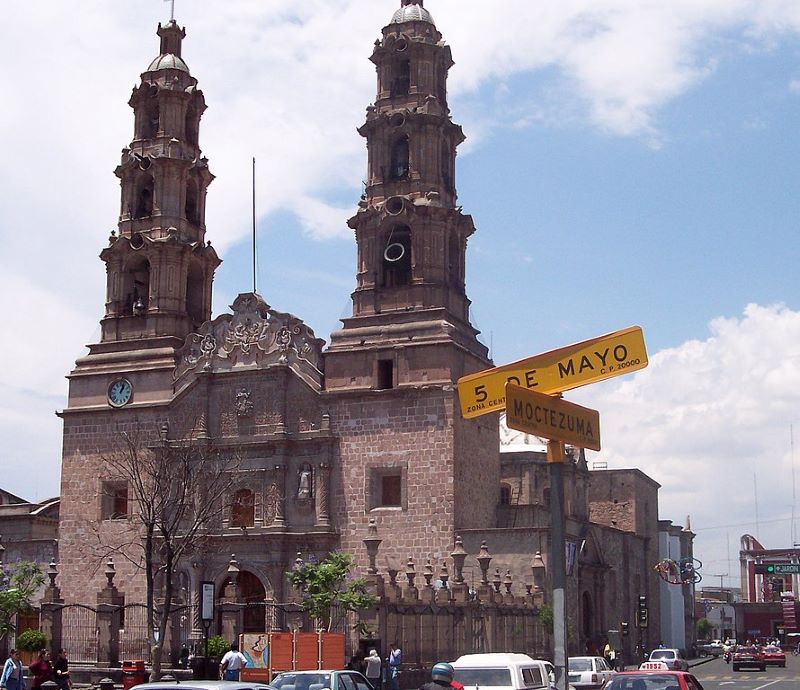
Aguascalientes in central Mexico celebrates Day of the Dead with the Festival of Skulls (Festival de las Calaveras) from 28 October to 2 November.
The festival occurs on the city fairgrounds, with concerts and other performances, plus lots of traditional food and local handicrafts. The highlight of the event is the grand parade of calaveras along the Avenida Madero.
Aguascalientes is the birthplace of José Guadalupe Posada, the creator of the iconic La Catrina image we see today.
Travel Tips And Resources
Travel Insurance: I never leave home without travel insurance. My personal opinion is if you can afford to travel, you can afford to buy a travel insurance. All things can happen while on the road and you can never be too sure. And it's something that you'll be glad to have when you need it. For my preferred travel insurance, I use Safety Wing.
Where To Stay: I personally use Booking.com for all my accommodations. Check out for their latest deals here.
Reading Resources: Check out our best reading resources here.

Similar Posts

20 Popular Mexican Superstitions
Among Mexico’s many fascinating cultural traditions is a significant interest in the paranormal. Mexico is home to fascinating superstitions passed down from generation to generation, many of which have their roots in old indigenous beliefs or the Catholic impact on Mexican society. These widespread beliefs are interwoven with daily life, lending an air of mystery…

9 Most Popular Mexican Actresses Who Have Achieved International Fame
Are you looking for the most popular Mexican actresses that achieved international fame? If we begin to really talk about why we love Mexico, the list will never end. This North American country is home to some of the world’s most fabulous beach destinations. Its colorful festivities are among the world’s most famous. Mexican culture…

15 Interesting Facts About Tequila
Do you want to learn some interesting facts about tequila? Weber agave tequilana, or the Weber blue agave plant, grows in abundance in the highlands of the state of Jalisco, in central western Mexico. Over 300 million of this plant are harvested here every year. Tequila, the unique Mexican liquor, is made of honey water…

14 Fun Facts About Thalia
Do you want to learn some fun facts about Thalia, the Mexican singer and actress? Thalia was born Ariadna Thalia Sodi Miranda on August 26, 1971, in Mexico City to a painter mother and a scientist, doctor of pathology, criminologist and writer father. She went on to become a force to be reckoned with in…

12 Famous Mexican Athletes
Many of the best athletes in the world are from Mexico, a country that values sports. Like the rest of Latin America and the world, Mexicans love their football. Second, only to soccer in popularity, boxing is also a favorite sport in Mexico. Mexicans also love basketball, baseball, rugby, tennis, golf, taekwondo, track and field,…
Top 10 Aztec Weapons
Are you curious to know the top Aztec weapons used by mighty warriors from this powerful civilization? When it comes to ancient civilizations, the Aztecs stand out because they did some amazing things in different areas. They weren’t only good at architecture and agriculture, they also knew a lot about fighting. The Aztecs had impressive…